



The Latest in Web Application Technology: Software Trends Shaping 2025–2026
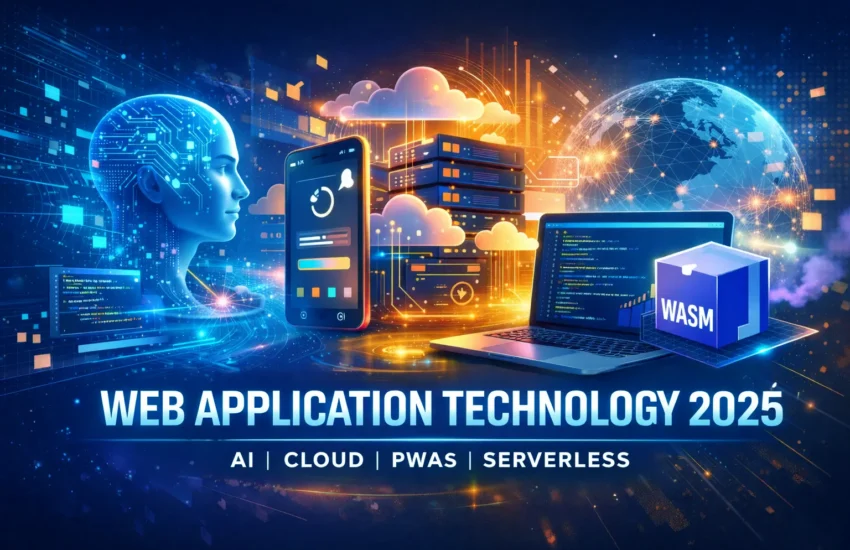
Web application technology continues to advance at breakneck speed, driven by artificial intelligence, cloud computing, scalable architectures, and new developer tools. In 2025 and into 2026, the landscape for web apps isn’t just evolving — it’s transforming how software is built, used, and delivered across industries.
Here’s a look at the most exciting developments powering web applications today:
🧠 1. AI Integration Is Becoming Standard
Artificial intelligence is no longer optional — it’s becoming a core part of web application development. AI tools now assist developers with code completion, bug detection, database optimization, and even full-stack generation. AI also shapes user experiences by powering personalization, recommendations, and smart automation inside apps. As AI integration grows, web applications are becoming more adaptive and intuitive.
📱 2. Web and App Convergence with PWAs
Progressive Web Apps (PWAs) are gaining momentum because they deliver mobile-app-like performance directly in a browser without installation. PWAs load quickly, work offline, and support push notifications — making them highly engaging and cost-effective for businesses of all sizes. This trend is reshaping how companies approach mobile and web development alike.
☁️ 3. Cloud, Serverless & Edge Computing Boost Performance
Cloud computing remains fundamental for modern web apps, but the real innovation lies in serverless architectures and edge computing.
- Serverless enables developers to run backend functions without managing servers, reducing costs and simplifying scaling.
- Edge computing brings data processing closer to users to cut latency and speed up response times — especially important for global applications.
Together, these patterns help deliver faster and more scalable web applications.
🔧 4. Faster Development With Low-Code, No-Code & AI Tools
Low-code and no-code development platforms are democratizing web app creation. These tools help teams and even non-technical users rapidly design, prototype, and deploy fully functional applications with minimal coding. Coupled with AI-powered code assistants, developers can accelerate workflows and innovate faster than ever.
Platforms like Base44, for example, use AI to let users build applications through conversational interfaces — a growing trend in accessible software creation.
⚙️ 5. Frameworks & Languages Evolve
Popular frameworks and languages continue to adapt based on developer needs. New tools and updates — like the latest releases of full-stack frameworks and support for WebAssembly — enhance performance, portability, and scalability. WebAssembly, for instance, enables near-native speeds inside browsers, allowing complex applications (like games or advanced data processing tools) to run without traditional plugins. While JavaScript frameworks remain dominant, alternatives and improvements continue to emerge.
🔐 6. Security and Resilience Get Smarter
With the rise of dynamic and data-driven web applications, security becomes more critical than ever. Modern web architectures now integrate real-time threat monitoring, adaptive API protection, and machine-learning-powered defenses at the edge. These technologies help web apps resist bot traffic, DDoS attacks, and other sophisticated threats — all while preserving performance and compliance.
🔄 7. New Browser Capabilities Change the Game
Web browsers themselves are evolving. The emergence of AI-powered browsers — which can summarize content, navigate websites automatically, and even interact with pages on behalf of the user — is shaping how web applications are experienced. These innovations blur the lines between traditional web interfaces and intelligent user agents.
📈 8. The Software Market Is Exploding
The global software development market is projected to grow sharply in the coming decade, driven by digital transformation, AI adoption, and cloud reliance. This growth underscores how central web applications have become to business operations, customer engagement, and future technologies.
🌐 In Summary
Web application technology in 2025–2026 centers on intelligence, performance, accessibility, and developer productivity. From AI-guided coding and serverless deployments to PWA adoption and advanced security, this era of web apps promises smarter software that loads faster, scales easily, and connects with users more meaningfully than ever.
Whether you’re building enterprise platforms, consumer apps, or next-generation interactive experiences, staying informed about these trends will help you innovate effectively and stay ahead in the rapidly evolving world of web software.